A framework for designing behavior change.
For teams innovating products, services, interactions, experiences, and organisations.
Why use this Canvas?
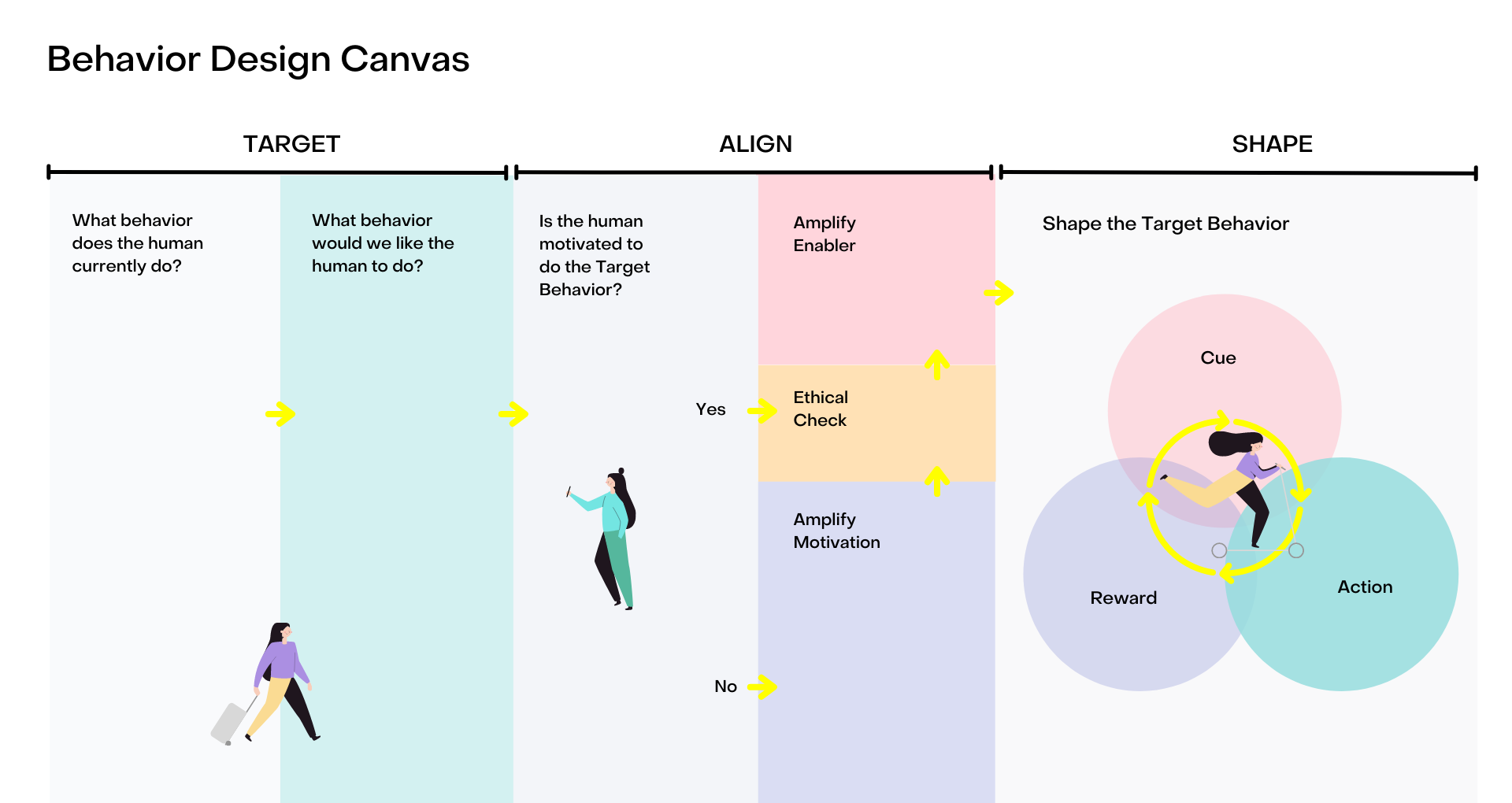
Behavior change is the one necessary criteria for any product, service, or experience to be considered successful. If users don't change what they do, nothing else you shipped matters. The Behavior Design Canvas puts behavior at the centre of the design process — not features, not flows, not artefacts.
The Behavior Design Canvas provides a structured, repeatable process for teams to define the behavior they want, align stakeholders around it, and shape the interventions that will move it. It works for product teams, policy teams, service designers, and founders alike.
Presented, applied, loved at.
Webinars on using the Behavior Design Canvas.
Meta RayBan Glasses Teardown
Shortcut Accelerator, Helsinki
Behavior Design for Startup Founders
Helsinki Business College / XES
Webinar — B2B SaaS Product Growth
Plug and Play Tech Center, San Francisco
Workshop — Transforming Society through Social Behavior Change
Sitra
References
The Behavior Design Canvas is a synthesis. It pulls together decades of work across behavioral science, psychology, design, and product — distilled into a single working surface for teams.
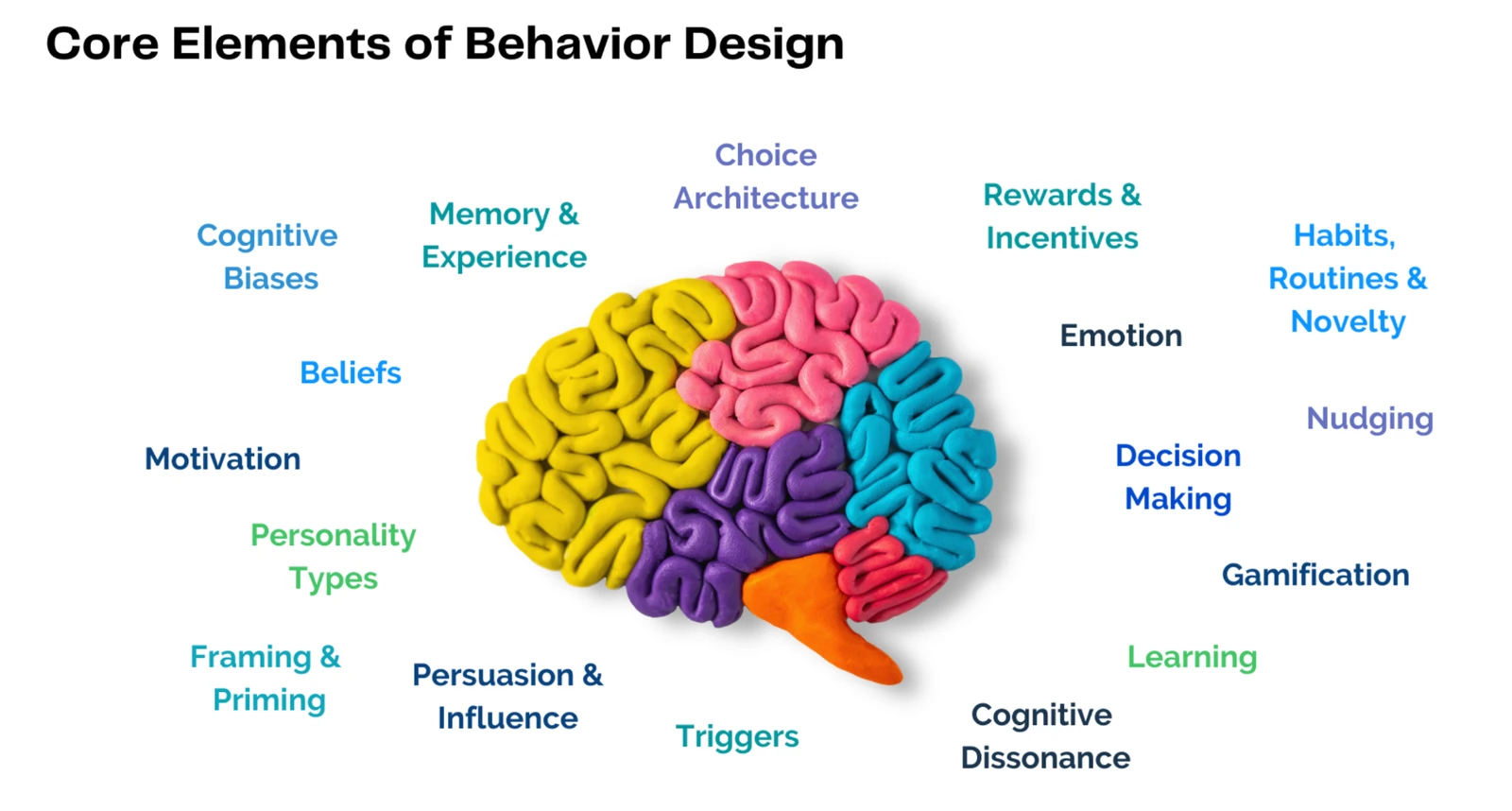
Below: the core elements of behavior design that the canvas operationalises. Further down: the books and papers that shaped it, organised by the canvas stage they most influenced.
Want to go deeper? Take the free Behavior Design Fundamentals course — six video lessons that walk through the full Canvas.
See the course →Books and papers that shaped the Canvas.
Organised by the stage of the Canvas they most influenced. Many of these works span multiple stages — they're listed under the one where their impact runs deepest.
Want help applying the Canvas?
We run workshops, embed with product teams, and coach in-house behavior design practices.